
How to Reduce Perceived Wait Times (The Psychology of Waiting)
The simple, digital buzzer that turns idle wait time into revenue. Customers track their turn while you promote upgrades and offers—automatically. No apps, no fuss.
Estimated wait: 12 mins
What is Wait-Time Perception?
The psychology of waiting is a discipline of behavioral operations that governs how human beings process delay. Foundational principles state that 'unexplained waits feel longer than explained waits' and 'unoccupied time feels longer than occupied time.' In service environments, managing the cognitive load of a wait is as critical to customer satisfaction as the speed of the service itself.
Key Insights
- •Occupied time feels shorter than unoccupied time — the single most reliable lever you have over a wait.
- •Transparency reduces anxiety; real-time updates provide a comforting cognitive anchor.
- •Unexplained waits feel significantly more discouraging than explained or known waits.
- •Perceived unfairness (e.g., someone cutting in line) triggers immediate negative customer sentiment.
- •Motivation to wait increases as the customer perceives they are getting closer to the service.
Why Occupied Wait Times Feel Shorter
In customer service, frustration stems less from the absolute length of a delay and more from the customer's state of mind while waiting.
When left waiting without engagement, the brain naturally focuses on the passage of time—a process that makes the wait feel much longer. Strategic engagement shifts that focus, effectively compressing the perceived wait time — which, in practice, is what a digital pager app gives a waiting customer to focus on.
A widely reported example makes the point. As recounted by Alex Stone in the New York Times ("Why Waiting Is Torture," 2012), a Houston airport received a stream of complaints about the wait at baggage claim. Adding staff shortened the wait but not the complaints. What worked was moving arrival gates farther from the carousels, so passengers spent more of the time walking and less of it standing still — converting unoccupied waiting into occupied walking, and dropping complaints sharply. The clock barely changed; the experience did.
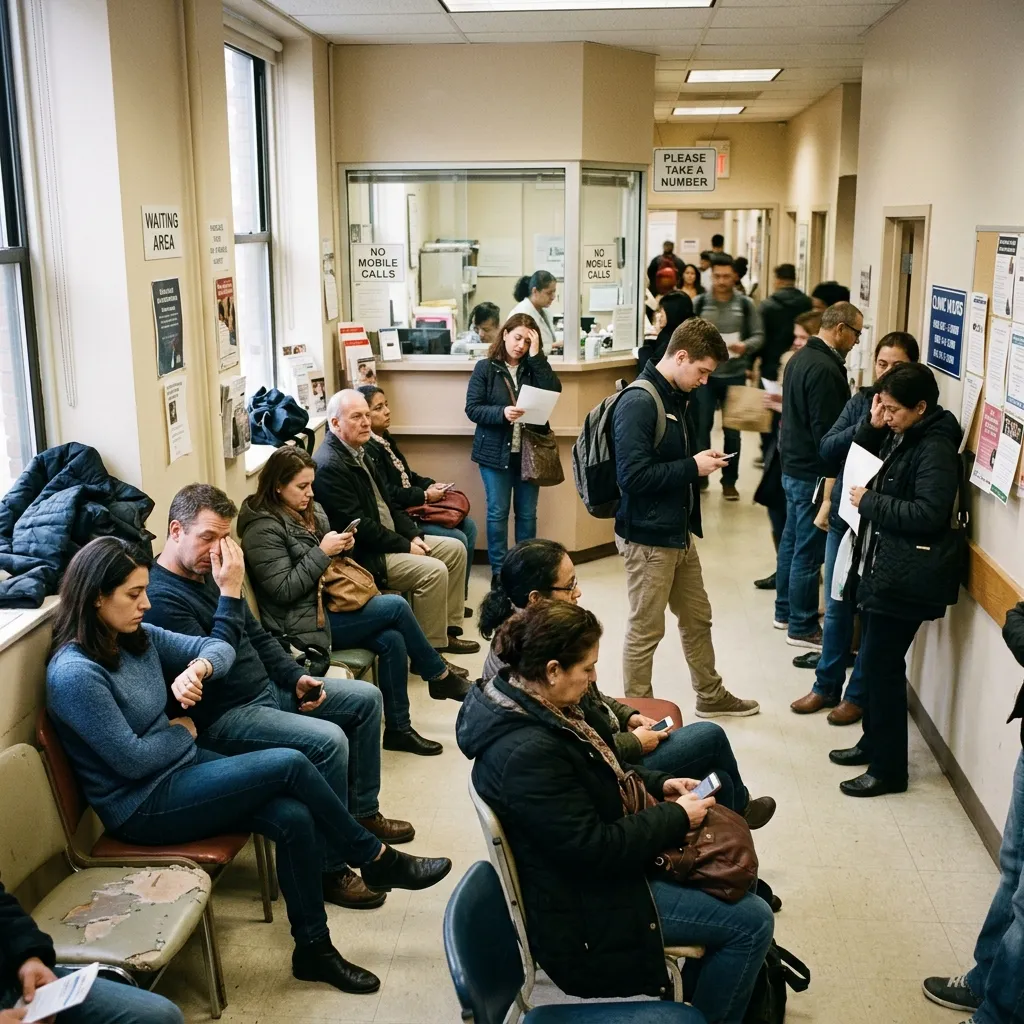
Maister's Eight Laws of Waiting
David Maister — a former Harvard Business School professor, not a psychologist — set out eight propositions in his 1985 essay The Psychology of Waiting Lines that remain the most-cited framework in service operations. When a customer enters a queue, their perception of time is shaped by these factors:
- Occupied time feels shorter than unoccupied time.
- People want to get started — pre-process waits feel longer than in-process waits.
- Anxiety makes waits seem longer.
- Uncertain waits feel longer than known, finite waits.
- Unexplained waits feel longer than explained waits.
- Unfair waits feel longer than equitable waits.
- The more valuable the service, the longer people will wait.
- Solo waits feel longer than group waits.
The one Maister singled out as the most acute is uncertainty. In his words:
"The most profound source of anxiety in waiting is how long the wait will be."
The Power of Visibility
This is why visibility matters so much. When you provide high-transparency indicators—like live position updates—the customer transitions from passive anxiety (wondering when they will be called) to active expectation.
It connects directly to Maister's first law. As William James observed, and Maister quotes him, "boredom results from being attentive to the passage of time itself." Give a waiting customer nothing to do and they monitor the clock; give them a task — browsing content, watching their position advance — and their attention moves off the wait. You aren't shortening it, you're occupying it.
Putting Maister's laws to work on the floor
The laws are diagnostic; the point is what you do about them. Four of the eight translate almost directly into things a service business can change this week.
Make the order visible (law 6, fairness)
Customers care deeply about equity. A visible, numbered order prevents the frustration and anger triggered by perceived line-cutting or disorder.
Acknowledge people early (law 2, getting started)
The wait before service feels longer than the wait during service. A quick check-in, a form to fill, a menu to read — anything that signals "we know you're here" — moves them into the in-process phase sooner.
Give a position, not just a time (law 4, certainty)
An exact place (e.g., "3rd in line") is often more reassuring than a minutes estimate customers tend to doubt or over-analyse. It bounds the uncertainty Maister called the most acute source of anxiety.
Show progress (law 1, occupied time)
As customers watch their position advance, attention moves off the clock and patience grows. Visible movement keeps them invested in finishing the wait rather than walking away.
Business Application: From Static to Dynamic
Traditional service environments often deploy "static" waiting structures — lobby seating, linear physical queues, or silent hardware buzzers. These models are inherently high-friction because they offer zero operational transparency.
Contemporary service design shifts the layout to a flexible, digital waiting experience. By using digital wait trackers, businesses can allow guests to wait anywhere they choose. This frees them to walk around or wait in their car while staying perfectly synchronized with their place in line.
Operational Benefits & ROI
- Reduced Attrition: Clear queue tracking lowers lobby walkaways, especially during busy peak hours.
- Increased Attention: Waiting guests naturally monitor their status, creating a great opportunity to showcase bar menus or retail specials.
- Reduced Waiting Anxiety: Showing guests their exact position in line builds trust and makes them much more willing to wait.