
In-Wait Upselling
The best time to offer someone a little extra isn't at the till — it's while they're waiting, already hungry or in the mood, with your menu on their phone. It's a suggestion on a screen, not a pitch from a stressed staff member, so it never feels pushy.
Estimated wait: 12 mins
What is In-Wait Upselling?
In-wait upselling is a digital marketing technique that presents customers with relevant upgrades, add-on services, or retail products while they are actively monitoring their progress in a queue. By utilizing the customer's own device as the delivery platform, businesses bypass interpersonal sales friction and capture attention during a peak receptive window.
Key Insights
- •An offer made before the service starts tends to land better than the same offer at the till, when people have mentally moved on to paying and leaving.
- •A suggestion on a screen doesn't carry the awkwardness of a staff member pushing an add-on, so people say yes more freely.
- •A good photo of the thing you're offering does a lot of the work — someone waiting and a little hungry is easily tempted by a picture of a dessert.
- •Offer something that actually goes with what they came in for, and it reads as helpful rather than a random upsell.
Why Waiting Customers Say Yes
Timing is the whole game with upselling, and most businesses get it exactly backwards. They make the offer at the register, when the customer has already decided what they want and is bracing to pay. By then people are in a "just let me finish and go" frame of mind, and anything extra feels like being kept at the counter longer than they'd like.
Waiting flips that. Someone in the queue has committed to the visit but hasn't had it yet — they're looking forward to the meal or the haircut, not out the door. Put a tempting add-on in front of them there and it doesn't feel like a sale; it feels like making the thing they're already excited about a bit better. Same offer, completely different mood. There's a good deal of behavioural research pointing the same way: the goal-gradient effect (Kivetz and colleagues, 2006) finds that people push harder toward a reward the closer they get to it, and the endowed progress effect (Nunes and Drèze, 2006) shows that once a task feels underway, people are keener to see it through. A guest watching their turn approach is squarely in that frame of mind.
There's also the awkwardness problem. Plenty of good staff hate upselling — it feels pushy, so they skip it, and your best-margin extras never get mentioned. Putting the suggestion on the customer's own screen takes that off their plate entirely. In-wait upselling means every waiting customer sees the offer, nobody has to work up the nerve to make it, and your team can stay focused on the service itself.
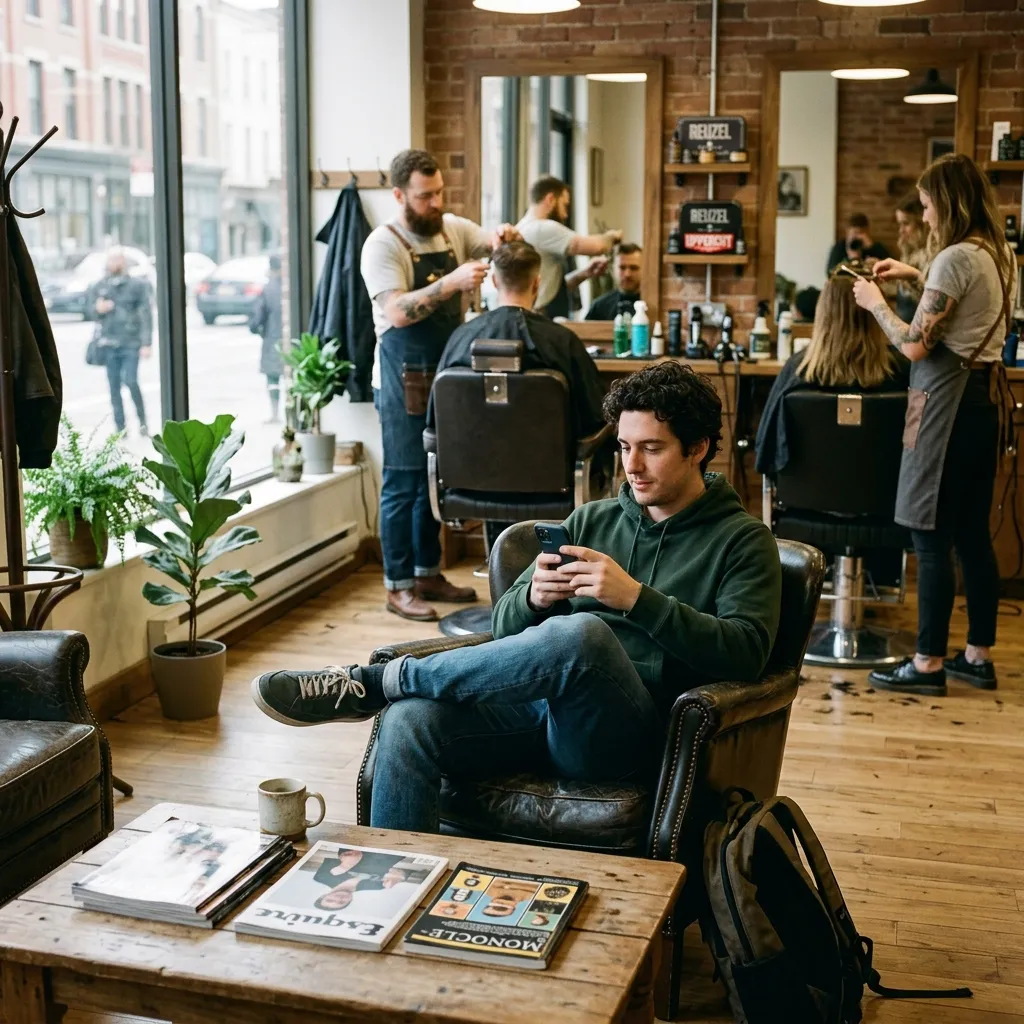
Why In-Wait Marketing Outperforms Traditional Signage
Captive Attention
Unlike posters on a wall, customers check their digital tracker multiple times, guaranteeing multiple high-intent impressions.
Privacy & Autonomy
Customers can browse upgrades privately on their own phone, removing the social pressure of a face-to-face pitch.
Standardized Delivery
Your best offers are shown to 100% of your waiting customers, 100% of the time, with 0% staff training required.
How It Works
Three steps to turning wait time into revenue with a Wait-Time Monetization.
Join & Claim
Customer joins the queue and watches the live status tracker on their phone.
Discover Offers
They see your configured promos, Instagram feed, or deep-conditioning upgrades right below their spot in line.
Upgrade & Earn
The customer asks for the add-on when they reach the counter, increasing your average ticket size automatically.