
How to Manage a 50-Person Food Truck Line at a Festival
Key Insights
- •A visible line is what scares people off, not the actual wait. Someone deciding whether to queue looks at the crowd, not a clock.
- •Free and Light plans cover 5 live orders at once — plenty for a normal lunch, not necessarily enough for a festival's first rush hour. Check this before you set up.
- •Guess your wait time slightly long, not short. A customer who's told 8 minutes and gets it in 6 is happy. Told 5 and it takes 9, and they're annoyed even though the actual wait was shorter.
- •Software can spread a line out so it stops looking like a wall of people. It can't fry faster or plate quicker — staffing and prep still decide your ceiling.
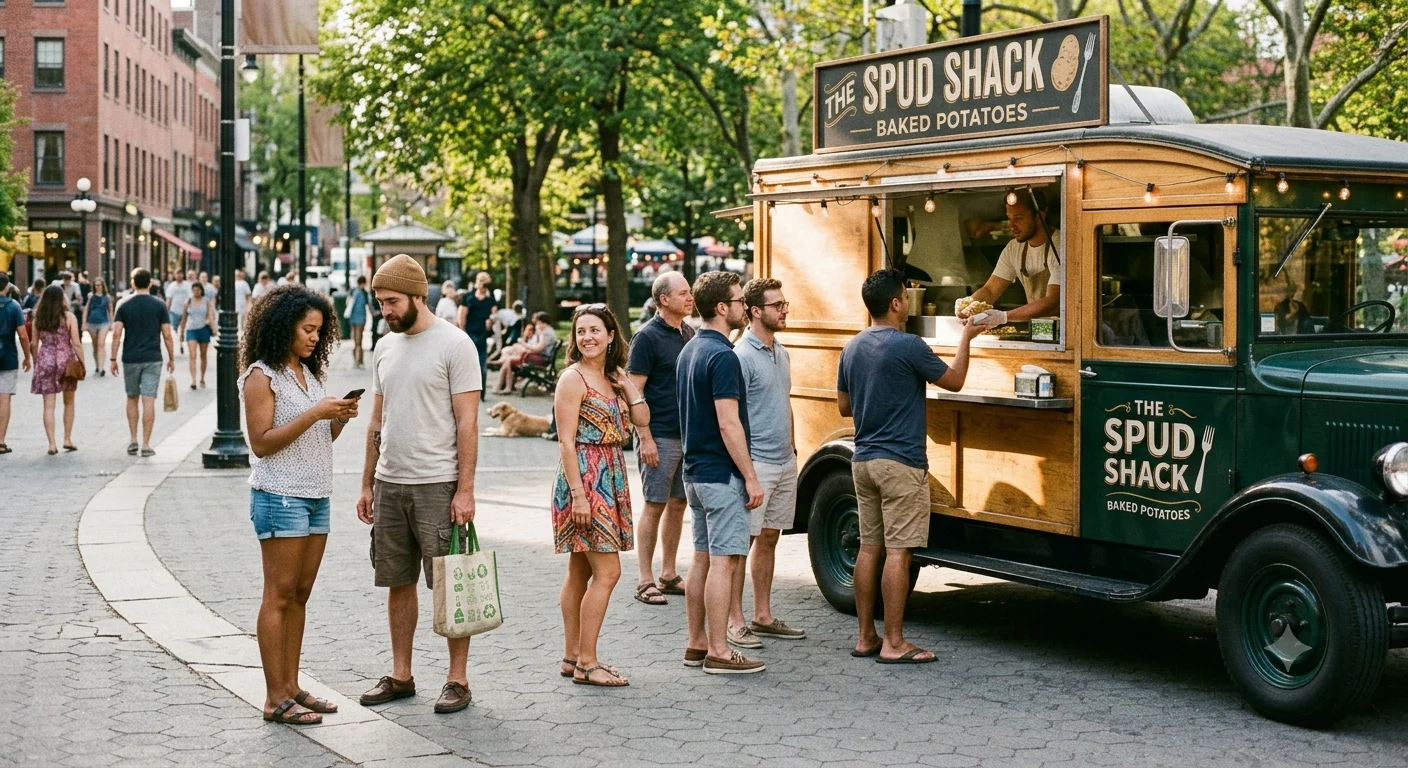
Fifty people is nothing at a drive-through — cars queue in a lane you can't even see the length of. Fifty people standing shoulder to shoulder in front of a single truck window is a different problem entirely. It reads as a wait nobody wants to join, and every person who glances at it and turns toward the burrito stand instead is a sale you never see, because they never got close enough to ask how long it'd actually be.
The line is the problem, not the wait
A festival crowd sizes up a queue in about two seconds, and it does it by eye, not by asking anyone how long it actually runs. Fifty people packed against a truck looks like an hour even when the real number is fifteen minutes, because nobody's counting heads — they're reading body language and how far back the crowd stretches. That snap judgment is covered in more depth on our psychology of waiting page, but the short version for a festival vendor is this: the crowd you can see is costing you the crowd you can't, because they never stopped walking.
The fix isn't a faster line. It's getting people to register their order and then walk away from the truck entirely — to the beer tent, to the next stage, wherever — instead of physically holding a spot with their body. A food truck order tracker does exactly that: someone scans a code at the window when they pay, and their phone becomes the thing standing in line, not their feet.
Get people off the sidewalk before they order
Put the QR code somewhere a passerby sees it before they've committed to standing in a crowd — a sandwich board a few feet back from the window works better than a sticker taped inside it, where only the person already at the front ever sees it. If you don't have a code yet, the free QR code generator makes one in under a minute; print it big enough to scan from a few feet away in direct sun, which most phone cameras handle worse than you'd expect.
Once someone scans, their order opens as a live tracker in their own browser, running on their cellular data rather than the truck's WiFi — which matters at a festival, because most fairgrounds don't have WiFi worth using anyway. They wander. Their phone buzzes when the food's up. Nobody's standing at your window for eight minutes wondering if they've been forgotten.
Set a wait estimate you can actually hit
The product default for quick-service orders is five minutes for a straight pickup and ten for anything made to order — a reasonable starting point for a normal shift, but festival volume doesn't behave like a normal shift. The first rush after a headline act ends can blow through both numbers fast. Time your first ten orders once the crowd actually arrives, then adjust the estimate up. It's a better problem to solve on paper for two minutes than to discover live in front of fifty people.
Err long. A customer told nine minutes who gets their food in seven walks away impressed. A customer told five who waits nine feels lied to, even though the second wait might genuinely be shorter than the first in absolute terms — perceived accuracy matters more than perceived speed.
Know your order ceiling before the gates open
Every plan has a cap on how many orders can be live at the same time, and it's worth checking yours before a festival, not during one. Free and Light both cover 5 concurrent orders, which is plenty for a slow Tuesday lunch and genuinely tight for the first hour after a popular set ends. Standard steps up to 15, Premium to 25. None of this is a hard outage if you hit the limit — new orders just can't go live until an older one clears — but it's the kind of thing you want to know at 9am, not while there's a line stretching past the next tent.
A single-window truck expecting a real festival crowd is usually better off on Standard ($24.99/month) than staying on the free tier and finding out mid-rush; a truck doing a quiet local market is probably fine on Free or Light ($11.99/month). Match the plan to the day, not the average week.
What still needs a human
None of this replaces staffing. If two people are running a grill built for a slow weekday and a festival sends you fifty orders in forty minutes, a tracker will spread the crowd out politely, but it won't cook the food any faster — you'll just have a calmer-looking line of people who are still waiting a genuinely long time. Fix the kitchen bottleneck first; the queue is a symptom.
Signal is the other honest caveat. Some fairgrounds sit in a dead zone, and a phone-based tracker needs a cellular connection to update. Scope this out before the event if you can — walk the lot with your own phone the week prior, if you're able to get access. And some guests simply won't have a working phone on them by 4pm: dead battery, no signal, kid who wandered off with it. Keep a simple fallback — a shared screen at the window, or someone calling out order numbers — for the handful of people this actually affects. It doesn't need to be the whole system, just a backstop.
The morning-of checklist
1.Print or laminate the QR code twice
Once for the window, once for a sandwich board a few feet back — so people scan before they've already funneled into a line.
2.Set your wait estimate before service starts, not during it
Guess low the first hour, then adjust once you've actually timed a few orders under real festival volume.
3.Check which plan you're on
Free and Light cover 5 orders running at once. A festival lunch rush on a popular truck clears that fast — confirm you're not capped before the gates open.
4.Decide who owns the "ready" button
One person, not whoever's closest. A missed tap is a customer standing at the window asking why nothing buzzed.
5.Have a plan for stragglers
Someone without a phone, or a dead battery by 3pm, still needs a way to know their order's up. A shared screen or a shout works fine as backup.